

Proactive Problem Solving with Advanced Parcel Tracking Features
JANUARY 13, 2025

In the fast-paced world of global commerce, parcel tracking has become an essential component of logistics and supply chain management. With businesses and consumers expecting real-time updates on the status of their shipments, GPS technology has revolutionized the way parcels are tracked and delivered. By enhancing visibility, accuracy, and efficiency, GPS plays a pivotal role in modern logistics.
This comprehensive article explores the critical role of GPS in parcel tracking, delving into how it works, its benefits, and its transformative impact on land, sea, and air transportation. Whether you’re a business owner, logistics professional, or curious consumer, this guide will provide valuable insights into the power of GPS technology in today’s delivery systems.
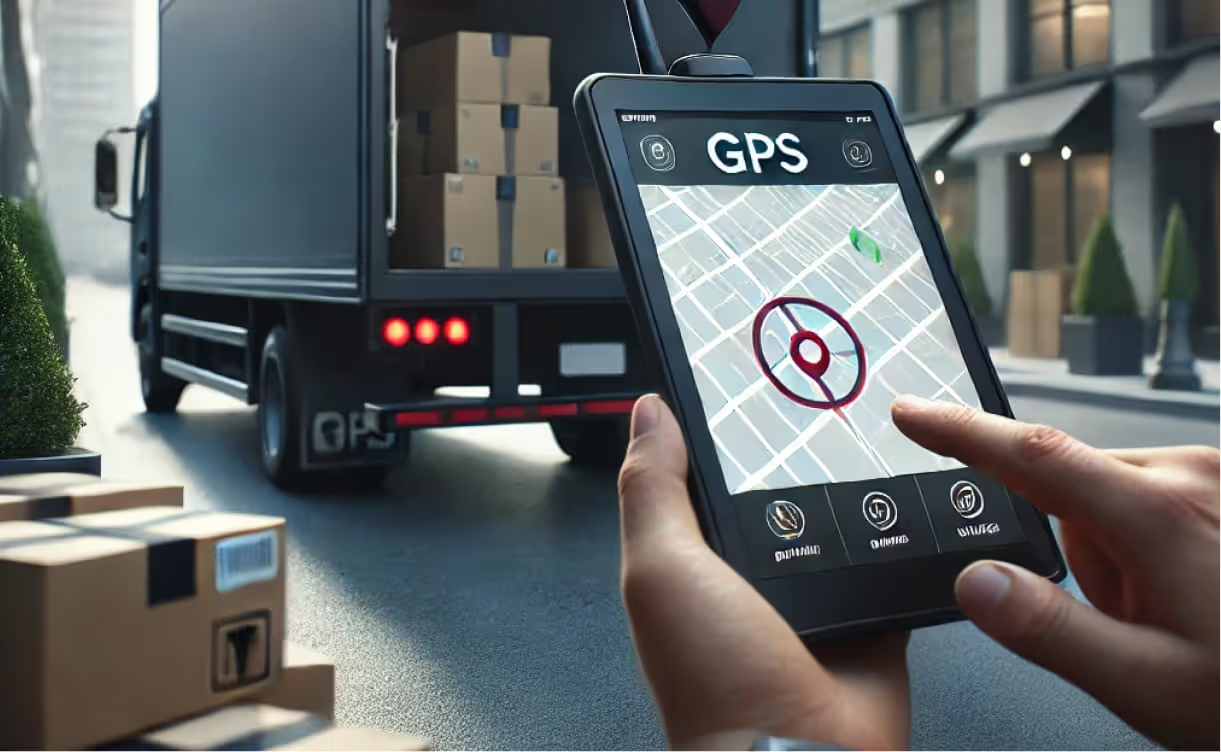
The Global Positioning System (GPS) is a satellite-based navigation system developed by the U.S. Department of Defense. Originally designed for military purposes, GPS is now a cornerstone of modern technology, with applications in transportation, communication, and logistics.
GPS relies on a network of satellites orbiting the Earth. These satellites transmit signals that GPS receivers interpret to determine precise location data. The system operates on three key components:
Space Segment: A constellation of at least 24 satellites in medium Earth orbit.
Control Segment: Ground stations that monitor and maintain the satellite network.
User Segment: GPS receivers used in various applications, including parcel tracking.
By triangulating signals from multiple satellites, GPS receivers calculate exact positions, providing accurate location data in real-time.
Before GPS, parcel tracking relied on manual processes, including barcode scanning and paper-based systems. While effective to an extent, these methods were prone to errors, delays, and lacked real-time visibility.
The integration of GPS technology into logistics systems marked a turning point. GPS-enabled tracking devices offered:
Real-time location updates.
Improved accuracy and efficiency.
Enhanced customer satisfaction.
Today, GPS is a standard feature in most parcel tracking systems, transforming the way goods are transported and monitored.
GPS allows businesses and customers to monitor shipments in real-time. This transparency builds trust and enables proactive decision-making.
Benefits:
Instant location updates.
Better coordination between shippers and carriers.
Reduced risk of lost or delayed parcels.
With precise location data, GPS improves the accuracy of estimated delivery times (EDTs). Customers receive reliable timelines, reducing uncertainty.
GPS helps logistics companies plan and optimize delivery routes, minimizing:
Fuel consumption.
Travel time.
Delivery costs.
GPS tracking enhances the security of high-value shipments. Geofencing alerts and real-time monitoring prevent theft and unauthorized access.
Providing customers with real-time tracking updates fosters transparency and trust. Features like live maps and notifications elevate the overall experience.
Use Case: Delivery Trucks and Last-Mile Logistics
GPS is widely used in trucking and last-mile delivery to:
Monitor fleet locations.
Optimize delivery schedules.
Provide real-time updates to customers.
Use Case: Cargo Ships and Container Tracking
GPS plays a vital role in maritime logistics by:
Tracking vessel locations.
Ensuring efficient port operations.
Monitoring container movements.
Use Case: Air Cargo and Drone Deliveries
In air logistics, GPS enhances:
Flight tracking.
Cargo handling efficiency.
Emerging technologies like autonomous drones.
By integrating GPS with inventory systems, businesses can:
Track shipments from origin to destination.
Reduce stockouts and overstocking.
Fleet operators use GPS to:
Monitor vehicle performance.
Plan maintenance schedules.
Improve driver behavior.
Real-time tracking minimizes risks by:
Detecting delays.
Preventing theft and tampering.
Enabling contingency planning.
Streamlined operations.
Reduced operational costs.
Increased efficiency and productivity.
Real-time updates and notifications.
Reliable delivery timelines.
Greater trust and satisfaction.
Geofencing creates virtual boundaries around specific areas. Alerts are triggered when shipments enter or leave these zones.
Applications:
Monitoring high-value goods.
Enhancing warehouse security.
IoT-enabled sensors paired with GPS provide:
Real-time data on shipment conditions (e.g., temperature, humidity).
Advanced analytics for better decision-making.
AI-powered GPS systems analyze data to:
Predict delivery delays.
Suggest optimal routes.
GPS signals can be disrupted by:
Urban canyons.
Dense forests.
Adverse weather conditions.
Solutions:
Use multi-constellation receivers (e.g., GLONASS, Galileo).
Incorporate backup tracking methods.
Tracking systems must comply with regulations to protect user data. Businesses can ensure privacy by:
Using encrypted communications.
Adhering to GDPR and other standards.
While GPS systems offer significant benefits, initial setup costs can be high. Businesses can mitigate this by:
Choosing scalable solutions.
Partnering with third-party providers.
Self-driving delivery vehicles equipped with GPS will revolutionize last-mile logistics.
Next-generation satellites will improve:
Signal accuracy.
Coverage in remote areas.
Combining GPS with blockchain ensures:
Tamper-proof tracking data.
Greater transparency in the supply chain.
AI will enhance GPS tracking by:
Predicting optimal routes.
Identifying inefficiencies in real-time.

Amazon’s GPS-enabled tracking provides:
Real-time updates via the app.
Accurate delivery estimates.
Maersk’s system uses GPS and IoT to:
Monitor container locations.
Ensure optimal shipping conditions.
FedEx integrates GPS with sensors to:
Track high-value shipments.
Provide data on temperature and humidity.
GPS technology has transformed the logistics industry, offering unparalleled visibility, accuracy, and efficiency in parcel tracking. From enhancing customer experiences to streamlining supply chains, the benefits are undeniable.
As technology evolves, GPS will continue to play a central role in logistics, integrating with AI, blockchain, and IoT to deliver even greater value. By adopting GPS-enabled systems, businesses can stay ahead of the competition, ensuring timely, secure, and transparent deliveries for years to come.